Complex code. Sticky problems.
Advent of Code 2026
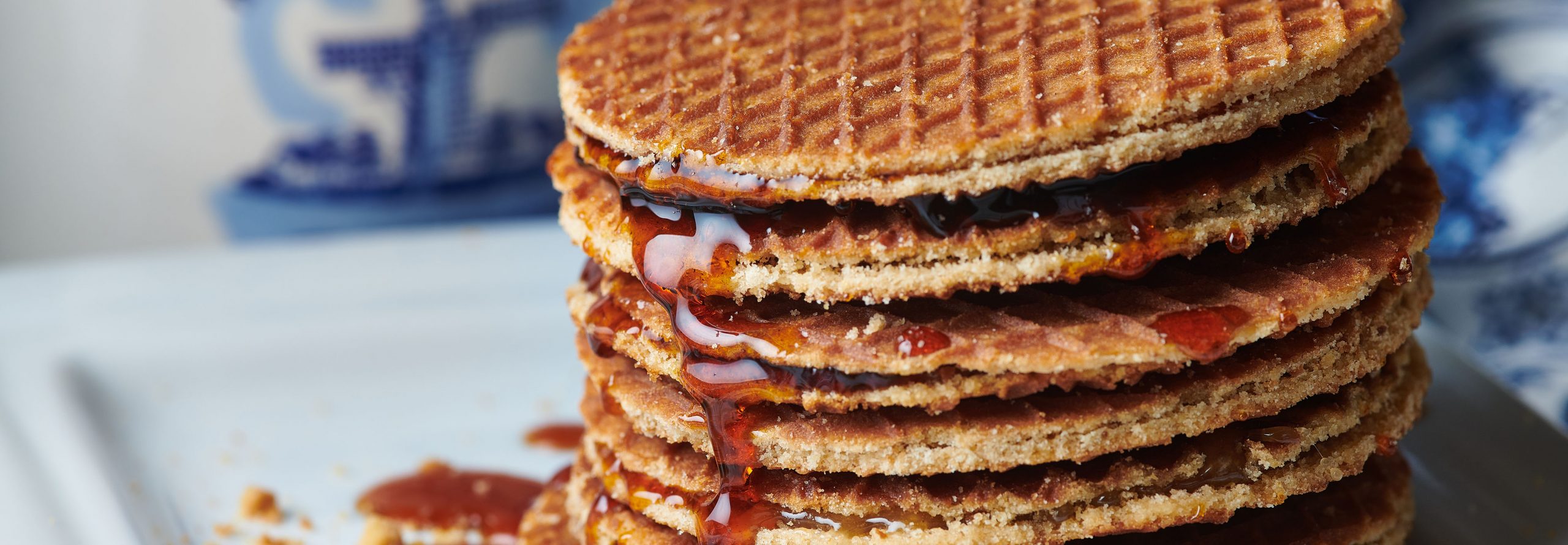
In Gouda, we engineer complex software, electronics, and the occasional stroopwafel crisis. Solving sticky problems is part of the job. Sometimes that means building mission-critical systems. Sometimes it means questioning whether a stroopwafel really needed a technical specification.
Your code – our stroopwafel problems
Our engineers have cooked up three puzzles for you. Expect sticky edge cases, a little overengineering, and plenty of reasons to check your assumptions. Pick a puzzle, fire up your editor, and see what happens. Share your results with us — there’s a sweet reward in it for you!
Sponsor Advent of Code
We’re happy to sponsor Advent of Code and share our love of a good challenge. Have fun, and may your code run before your coffee gets cold.
#1 Reusing Stroopwafel Snippers
With our headquarters in Gouda, we at Technolution have something of a tradition of sharing stroopwafels with our customers. Because we are increasingly successful, we have to buy more and more stroopwafels. Thanks to our new ventures in agritech, our high-tech research unit has recently acquired a food-grade 3D printer. We can now print our own stroopwafels!
Apart from problems with stroop clogging the nozzles, the current setup has another limitation: stroopwafels can only be printed in square pieces, the cells of a grid. For the final step, a circular cutter is used, and the trimmings, the snippers, are typically eaten by the operators. For example, a stroopwafel with a diameter of 10 cells, cut from the middle of a block of 10 by 10 cells, looks like this:
..~~~~~~..
.~++++++~.
~++++++++~
~++++++++~
~++++++++~
~++++++++~
~++++++++~
~++++++++~
.~++++++~.
..~~~~~~..
The + cells are the 60 cells that lie entirely inside the cookie. The ~ cells are the 28 cells that the cutter slices through. The . cells are not needed. So the 3D printer prints only 60 + 28 = 88 cells.
Upper management is pushing for sustainability, but is also concerned about the (dental) health of the operators. They ask you to come up with a way to minimize waste, and they want to be updated about this in a live stream. You consider simply feeding the leftovers back into a late stage of the 3D printer. Your plan may work, but before meddling with the 3D printer, you have to write a hefty report on the suggested cost savings.
You set out to calculate the waste avoided by reusing the edible leftovers. This tells you when you have to send an update message to management. You report that a stroopwafel is saved as soon as the snippers you have kept add up to the area of a whole cookie.
For reference, the example cookie has an area of around 78.54 cells, and the process yields approximately 9.46 cells of snippers per cookie. This means that after 8 cookies you are still a little short, but after 9 cookies you have enough to make one additional cookie, and you can report this in a web message.
I’ve solved the sticky problem
Stay tuned!
Stay tuned for a second and third puzzle. We expect the next puzzle te be online on December 1