
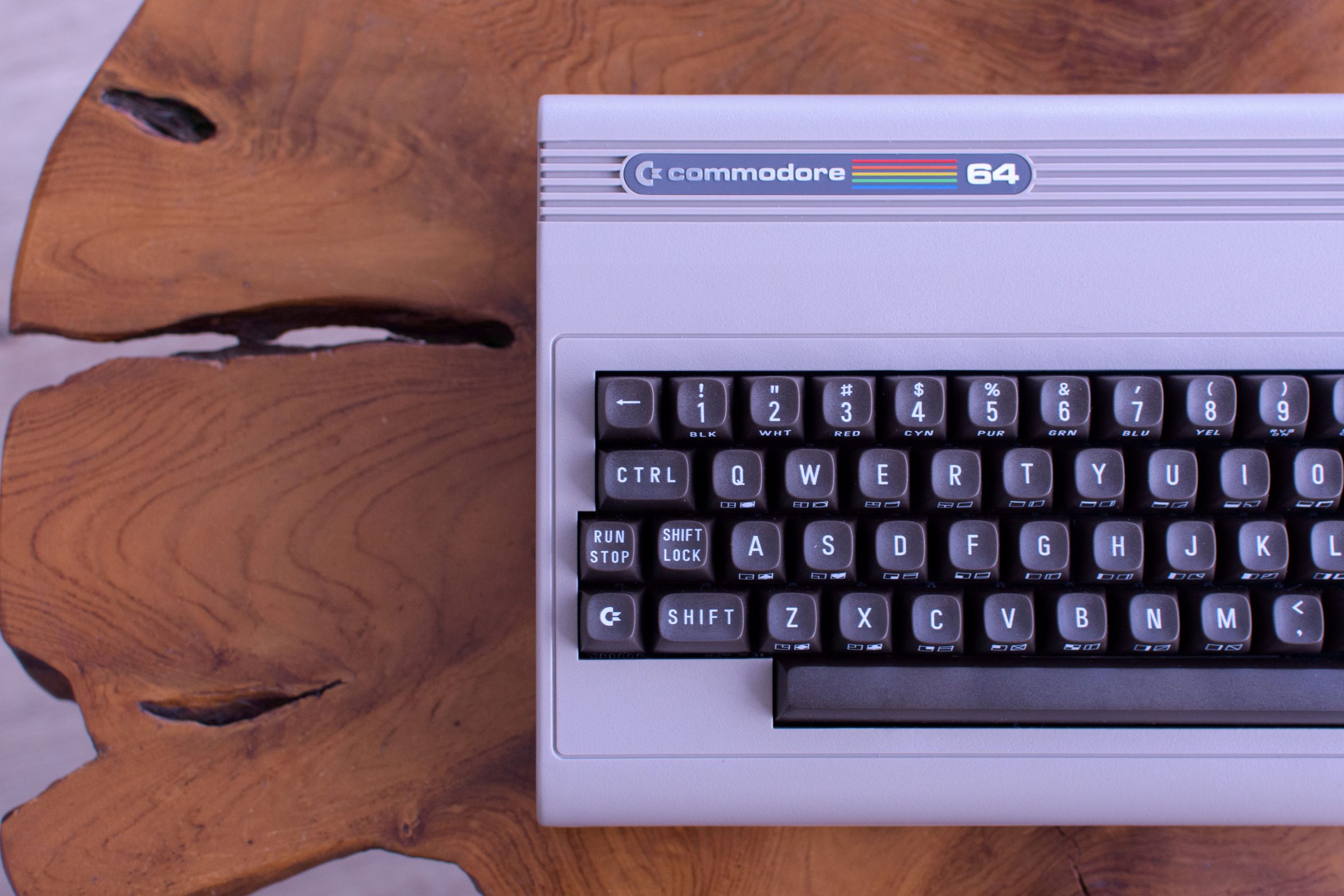
Crucial support for the rebirth of the Commodore 64
For a whole generation, the Commodore 64, released in 1982, was the first computer they ever experienced. With a whopping 64 kilobytes of memory, color rendering (on a CRT television) and a modest price, the C64 soon became a huge success. It still holds the record for the best-selling desktop computer of all time. Now, it is being recreated as the Commodore 64 Ultimate. Technolution supported the rebirth of this historic piece of technology by solving a show-stopping problem on the critical development path.
Commodore 64 Ultimate – FPGA-driven
The Commodore company sadly went bankrupt in 1994, but the C64’s fan base is still impressive. A year ago, YouTuber Perifractic (Christian Simpson) acquired the Commodore brand and initiated a faithful recreation of the Commodore 64 – with a few extras. Today, the release of the Commodore 64 Ultimate is very close. A lot of the credit for the technological development goes to our colleague Gideon Zweijtzer, who designed the motherboard. At its core runs an FPGA – a programmable chip. This implementation enables compatibility with all the original C64 peripherals, something that a software emulation could not do. The Commodore 64 Ultimate is therefore a true recreation of the original C64.
Improved Signal Integrity
The development did not go without some hiccups, though. During production trial runs, a corruption of the HDMI signal (yes, the new C64 comes with HDMI!) caused glitches in the graphics rendering. Using a sophisticated Vector Network Analyzer, we performed a thorough analysis of the signal integrity of the motherboard. It turned out that some signal paths on the board exhibited resonant behavior, causing data-dependent bit errors and visual glitches. A redesign by Gideon of the signal paths solved the problem. The production of the Commodore 64 is now in full swing, and to be honest, we can’t wait to get our hands on it.