A clearer view of dangerous hotspots thanks to AI
Paul Meerman
When is a section of road unsafe? Accident statistics are important indicators of unsafe infrastructure. But they are based mainly on accidents that required intervention by the police or Rijkswaterstaat (the Dutch public works agency), or that involved injuries or fatalities. In practice, near misses are much more frequent, and they don’t show up in the statistics. But with the use of Artificial Intelligence (AI), we can now include near misses in the figures. And this offers new, valuable insight, even before anyone is hurt.
From accident statistics to continuous monitoring
Statistical data is important for policymakers. If multiple serious accidents occur at an intersection over a period of time, this is a reason to take measures. But there is something not right about this: it means taking action after it is too late. Also, information about such accidents is often scarce. We don’t always know why they happened. Was it the infrastructure, or dangerous road user behavior? Or simply bad luck?
We can have greater insight into the causes if we include near misses in the analysis. Near misses occur much more frequently than actual accidents, so that we can collect more data that leads to better information and new insights. Moreover, this allows us to make preventive changes to the infrastructure if we notice a lot of near misses are happening somewhere. This does require long-term, continuous monitoring of the location in question. And AI can do that.
FlowCube – Smart traffic sensor
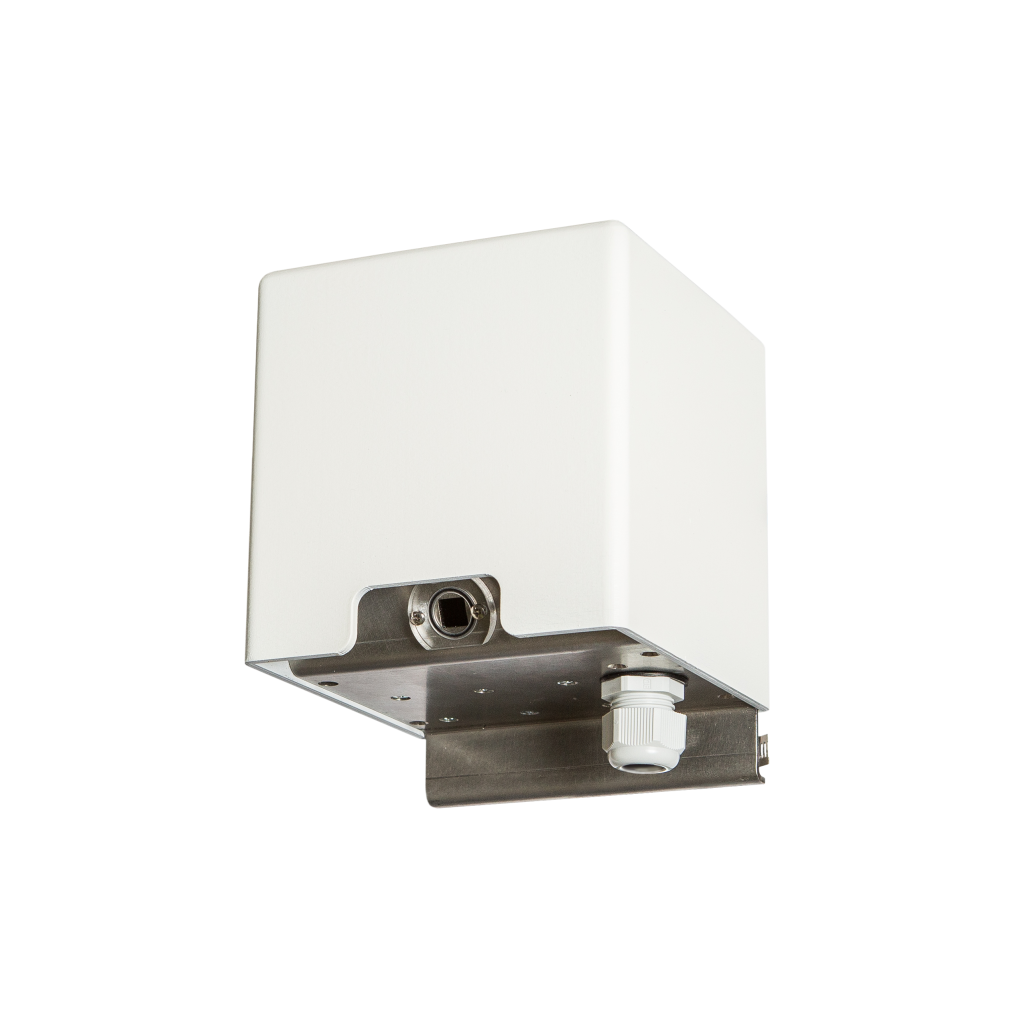
Technolution has been working with Vision AI for a long time: algorithms that have been trained to work with visual information. For a large-scale project in Copenhagen some years ago, we developed the FlowCube, a traffic sensor that can count cyclists on the road. Using multiple FlowCubes, we can calculate the travel times of cyclists across the city. And all this without infringing anyone’s privacy – the only data that is stored is the count.
Since then, this smart traffic sensor has learned to do a lot more. The FlowCube can now tell different modes of transport from each other, including pedestrians, cars, freight trucks, trams, and buses. And there is more. In San Francisco, FlowCubes counted passengers waiting at tram stops; including a separate count of wheelchair users. In another American city, FlowCubes recognized the hallmark yellow school buses, so that they could be given priority at traffic lights. At the IJmuiden sea lock, we used FlowCube technology to automatically gauge the draft of ships. And in two cities in Ohio, FlowCubes have successfully been monitoring near misses at busy traffic locations.
What is a near miss?
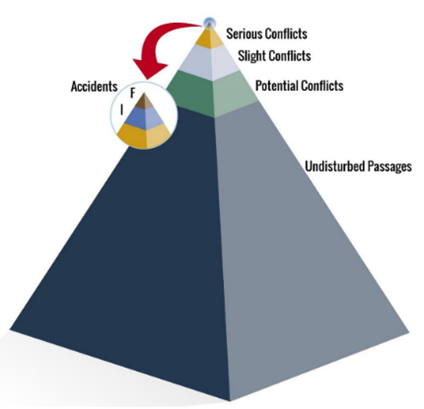
There are different ways to determine whether a traffic situation is a near miss. Time to collision is a good indication: something is a near miss if a collision would have taken place within a second and a half.
Another way is to assign a severity score: on the basis of the speed and the angle between the road users involved we calculate how severe an accident would have been. The kind of road user involved also makes a difference. Two pedestrians who nearly bump into each other are not counted as a near misses. It’s a different matter if a pedestrian is nearly hit by a car.
Research shows that near misses are a good indicator for accidents and possible safety improvements. Long-term analysis of our data can in due course show how near miss statistics relate quantitatively to registered accidents (for example: one accident for every one hundred near misses).
Near misses in practice – city trams
To take one example from our own experience. Public transport companies in large cities regularly have to deal with collisions between trams and other road users. These incidents have a large impact on the road users involved, the tram drivers, passengers, and bystanders. But the operational consequences can be substantial too. Costs of repair are high, and damaged trams are often taken out of circulation until they have been repaired, which negatively affects the timetables.
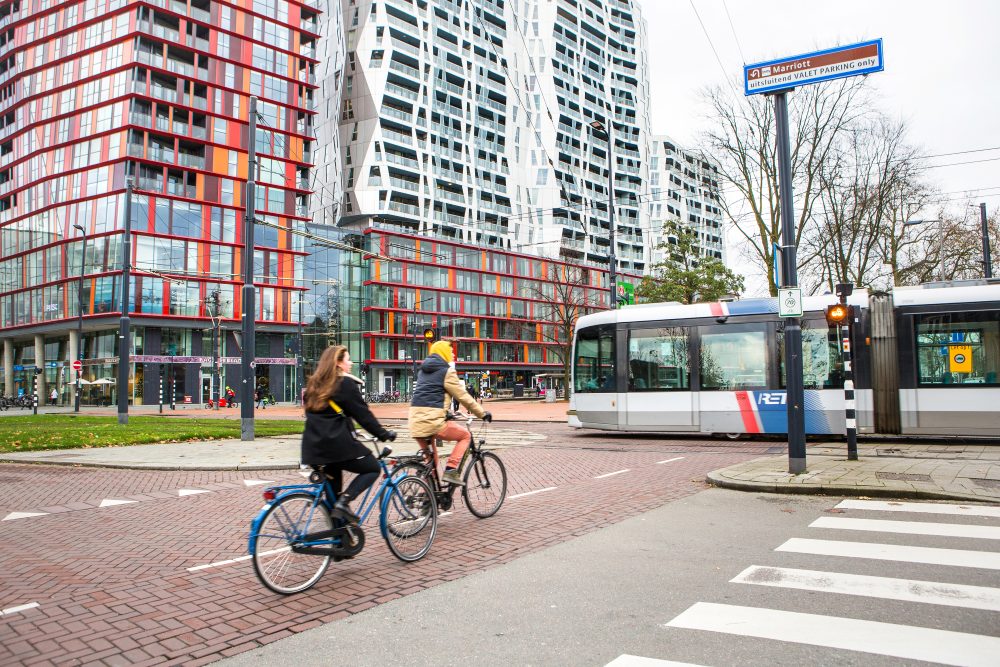
A number of large-city public transport companies has therefore decided to map the causes of collisions. They are seeking to use this information to take measures to minimize the risk of incidents. For example by changing guidelines for tram drivers, or improving solutions for blind spots. These transport operators expect, however, that many accidents are caused by infrastructure problems. For instance, at intersections where trams and cyclists cross paths, or at traffic lights with very short green times. Once operators have clear information about near misses that points to infrastructural causes, they can make properly motivated applications to city councils for changes to the infrastructure.
Privacy-secure video images and hotspots
So how do public transport companies monitor near misses involving trams? We install multiple FlowCubes at busy intersections in the city: traffic sensors with in-built Vision AI (see box). These sensors have been trained to identify all the trajectories that trams and other road users take. The passage data is sent to an application in the traffic control room, which analyzes them. The FlowCube has a video buffer of one minute. As soon as the application recognizes a near miss in the data, it requests the video in question from the FlowCube. This sends irreversibly anonymized video images to the traffic control room, so that every near miss video can be manually watched, verified, and analyzed without compromising the privacy of the road users.
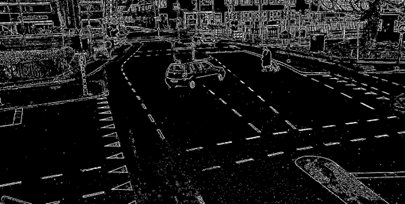
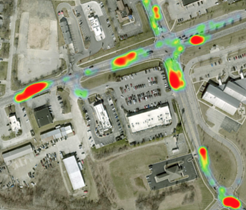
The FlowCubes constantly monitor the near misses at the intersection. Registered and verified near misses are displayed on a map. This gives a clear picture of where the dangerous hotspots are located on the intersection. This is very valuable information in conjunction with the near miss videos. It allows the operator to take measures that will be effective, or to contact the city council to request adaptations to the infrastructure and layout of the intersection.
Valuable information with a low-impact solution
Using AI-based traffic sensors can give us extremely valuable, detailed new insight into traffic and infrastructure. The great part is that impact on the environment and infrastructure is minimal. FlowCubes are unobtrusive, compact boxes that are installed at a height of about 4-6 meters, for example on lamp posts. And thanks to their built-in 4G connection, all they need is power. In other words: FlowCubes are smart and practical instruments to obtain rich information about traffic and infrastructure.
Paul Meerman is the public transport specialist and Business Developer at Technolution