OVpay gives new impetus to public transport
Trendboek Mobiliteit
Paul van Koningsbruggen, Mobility Business Unit Director at Technolution
Technolution is active in the world of mobility. We offer our clients high-grade solutions, from network-wide, data-driven traffic management, to AI-based traffic sensors, to effective, reliable public transport payment systems (OVpay). For 2026, I am seeing a number of clear trends that arise on the one hand from necessity, but also from opportunities that new developments offer.
Public transport in sparsely populated areas
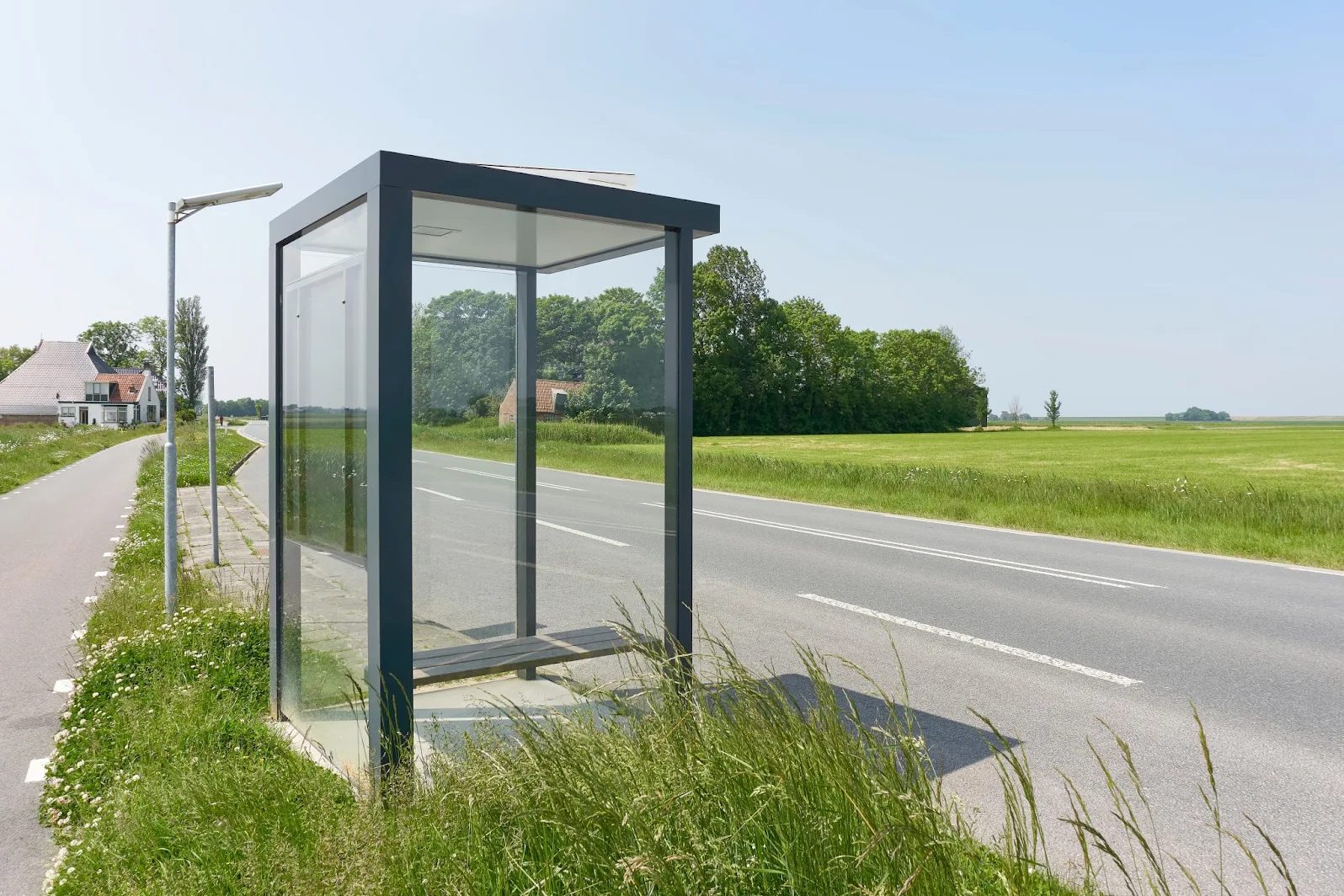
Rural public transport is struggling. With ageing populations and flight to urban areas, bus routes are becoming less cost-effective. As a result, routes are being abolished and people increasingly have to drive (if they have a car). It is a vicious circle, which can lead to transport poverty, particularly for lower-income households.
At the same time there is another, related development: as the population ages, more and more people are using transport provided for under the Wet Maatschappelijke Ondersteuning (WMO, Social Support Act). This is a costly service, particularly in sparsely populated areas (even though passengers normally pay very little). The estimate is that WMO transport as a whole currently costs the same as regular public transport.
These developments will inevitably lead to change; I am predicting the following mobility trends for 2026.
Trend 1: Integration with OVPay, including WMO transport
Before I address this further: I think the expansion of OVpay is one obvious trend for 2026. In addition to the train, the bus, and the tram, other modes of transport and services will be integrated into OVpay. This is turning “Mobility as a Service” (MaaS) into a widespread reality. This development starts with small steps: checking out your OV-fiets (bike-share bike) using your bank card, or receiving a discount on your onward train journey if you park your car on a P+R. But there are many other things that could be connected. A discount on charging your car if you have used a P+R, for example, or paying in parking garages.
And while we’re dreaming about integration and expansion: why not bring WMO transport under the umbrella of OVpay too? That would really make life easier for people. Of course, some technological steps would still have to be taken to make this user-friendly. But it is not that difficult to develop a simple app that works with pre-filled features (such as age or disability). The app would know, for example, that regular buses are not an option, would be able to book a taxi and communicate the estimated time of arrival.
As so often, the greatest challenges here are not technological but organizational. The integration of OVpay and WMO transport requires an open attitude and the willingness to work together, particularly on the part of health insurers, care facilities, and transport operators. But the technological possibilities are there, and the first pilots are underway.
Trend 2: Making the public transport offer more dynamic
WMO transport is a form of demand-responsive transport that fits the MaaS concept perfectly. This also applies to other flexible and shared transport services. But regular public transport could also become more demand-responsive. Truly making public mobility more dynamic involves bringing regular public transport, WMO transport, and other forms of public transport together. That is the next trend that I predict. Making public transport more dynamic also offers opportunities for the decline of rural bus routes.
Why not get rid of fixed routes and timetables, for example? Why should a bus not take a different route at night than during the day? But if bus routes are flexible throughout the day, why not have them stop at care facilities? And do we really always need bus stops? Take the Turkish dolmuş, ‘full buses’. They have a fixed route but no fixed timetable. There are stops, but passengers can also flag them down along the way. And their stops are similarly demand-responsive, while you pay for the distance traveled.
Public transport can be made more dynamic in many ways. Again, this does require an open mind, and the willingness to hold up traditional methods and procedures against the light. Technology will play a major role in all of this: if only to make the information supply more dynamic. Artificial intelligence (AI) can be of great assistance here.
Trend 3: In control with AI
Artificial intelligence is an important trend in its own right, but AI applications in the mobility sector are still relatively rare. This is something that will change. If we look at the trends identified above, I think the use of AI will be crucial to be able to control the growing dynamism of transport systems. Smart apps that have insight into transport services will be able to actively support passengers, both when planning their journeys and during the journey itself.
I expect that AI will come to fulfil many more transport-related functions. Consider only the huge renovation and redesign projects in the cities. Add to this urban densification, and it is clear that the road networks in cities will be far from reliable over the coming decades. AI and data algorithms are optimally suited to constantly calculate the functioning of the road network and determine how public transport should best respond. In this way, AI can help both passengers and transport operators deal with this reality, by informing, by predicting congestion, and by offering alternative routes.