The city as a nervous system: bringing back the human dimension
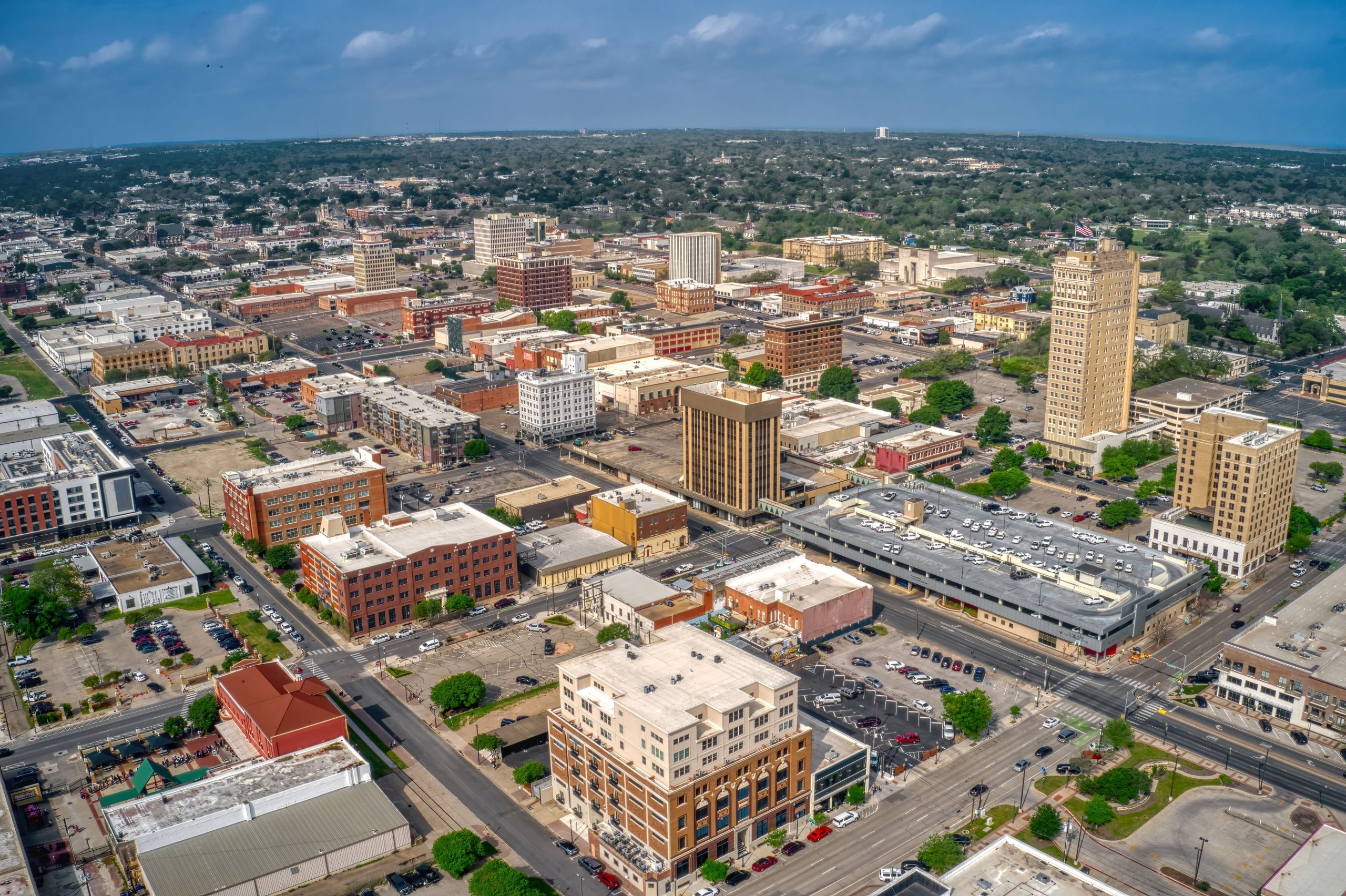
We were on a working visit to Waco, Texas. After a drive through this town in the American West, as we stood along the Brazos River with the din of Interstate 35 in the background, we asked ourselves a fundamental question: “What is the purpose of a traffic control center in the twenty-first century?”
We know the traditional answer: control of traffic in the city. It is the image of the traffic control center as a closed control room full of screens, where object operators and traffic operators control the city as if it were a machine. If there are road works, they notify service providers, who in turn update the navigation systems of road users so that they can adapt their route. If there is congestion, they adapt the roadside systems. In case of accidents, they establish a secure situation on the road and send a tow truck. All really useful, but also very much a reactive way of working.
In Waco, our design discussion with the Metropolitan Planning Organization (MPO) is taking a different direction, and we will be actually implementing Stage 1 in downtown Waco. The underlying principle is that the city is not a machine, but a living organism, a web of urban complexity. To let this organism grow, we are not building a closed room but a nervous system.
Cutting out interaction costs
Why are we doing this? Not because we want to optimize the flow of traffic, but because we love economic vitality – though of course these things are not mutually exclusive.
As we were told in Waco: “Look at our streets. Every minute a truck is stationary, money is lost. More importantly: every minute a student at Baylor University stands waiting at an unsafe intersection, she isn’t taking part in life in our inner city.” Waco’s MPO calls this interaction costs. These interaction costs are the friction of the city. Our goal is simple: minimize the friction.
We do this in Stage 1 through a new approach to intersections in the city. We no longer see an intersection arrangement as a cyclical divider of intersection capacity across conflicting directions of travel, but as a digital merging system. With our FlowCubes (privacy-secure, Vision AI-operated sensors), we continuously monitor all traffic from all directions. We can see how many pedestrians, cyclists, cars, trucks, public transport buses, and school buses are on their way towards the intersection, or are already waiting at the lights. On the basis of this broad perspective (per mode of transport, direction, volume, and wait time), we divide green time and minimize red time. If the system perceives that a specific division is causing near misses, it adapts accordingly.
This makes strolling past the downtown shops, bars, and restaurants more attractive and removes the barrier between ‘gown’ and ‘town’, allowing the economic motor that is the campus to connect with local business. We optimize not to increase speed; we optimize to foster connection.
Traffic technology the human way – systems that serve humans
Smart City technology is often equated with surveillance. Our vision is exactly the opposite. We call it traffic technology the human way. Currently, a pedestrian or cyclist has to adapt to technology: ‘Press the button and wait’. In our new system, technology adapts to human beings.
Imagine ‘Linda’, a 74-year-old Waco resident, who walks slowly. In our traffic arrangement, our Vision AI-equipped FlowCube sensors can spot her as she approaches. The system recognizes her lower pace and automatically adapts the traffic light cycle. The light will be green longer to allow Linda to reach the other side safely.
A core concept in the American mobility policy is equity. This is not an empty political slogan. Equity plays a role in traffic safety, but also with regard to travel times, economic factors, and environmental aspects. A good example is Vision Zero, the objective (also embraced by Waco) to eliminate traffic fatalities by 2050. Technology functions as an invisible helping hand that safeguards equity policy goals. Not by writing more tickets, but by building an infrastructure that cushions and corrects human errors.
Recentering humans
In Waco, we’re helping to build a city that is guided by the human perspective. To build a traffic control room that doesn’t operate centrally, from some office or closed room, but decides in a decentralized manner, at street level, and is always at the service of people. A sensitive, widespread nervous system that responds adequately and empathetically to the impulses it receives from the city’s residents.
This approach is innovative but also financially necessary in a country that has, on the one hand, almost unlimited space, and on the other, huge urban sprawl. Waco simply can’t afford to expand roads infinitely, and neither can many other cities in the US. Cities will have to use what they have more smartly.
In the Netherlands, too, there are successful examples of traffic control centers that have moved beyond the image of a control room. You’ve surely come across them. Forget the city as a machine. Let’s work together to build cities that function as smart webs. Cities where the technology is invisible so that humans can step back into the light.